
The system should work for people.
Work software should reduce the burden surrounding work while protecting the judgment, agency, and dignity of the people doing it.

Your team is carrying the cost of disconnected work.
Every useful tool created another inbox, another place to search, and another record to reconstruct. The tools never learned to coordinate—so people had to do it for them.

Control or chaos is a false choice.
The alternative is coordinated freedom: clear outcomes, visible constraints, reciprocal accountability, and room for people to exercise judgment.
Rigid control
More rules. More reporting. Less trust.
Operational chaos
More ambiguity. More reconstruction. Less time.
Shared truth creates trust.
Two perspectives do not have to become identical. They need a shared frequency: the same connected record of what happened, what changed, what was promised, and which constraints were present.
What you can hold us to.
One thing at a time.
Priority is visible. The person doing the work retains agency.
Time takes care of itself.
Work creates its own operational record. Nobody stops to reconstruct a timesheet.
Communication stays with the work.
Context returns when it matters instead of disappearing across channels.
Accountability flows both ways.
Leaders see constraints. Workers can show the conditions surrounding their commitments.
Judgment remains human.
Cards surfaces evidence. Accountable people ask, negotiate, and decide what it means.
What Cards refuses to become.
Simplicity is the discipline of carrying complexity for someone else.
We evaluate every product decision against one question.
Want truth without surveillance.
- Want accountability to flow both ways
- Believe people need room to exercise judgment
- Value simpler movement over visible complexity
- Start with good faith and ask better questions
Use software to tighten the grip.
- Want behavioral scoring or covert observation
- Expect command-and-control enforcement
- Pressure people to produce more regardless of context
- Treat complexity as proof of managerial competence
 Space
Space Family
 Recreation
 Rest
Rest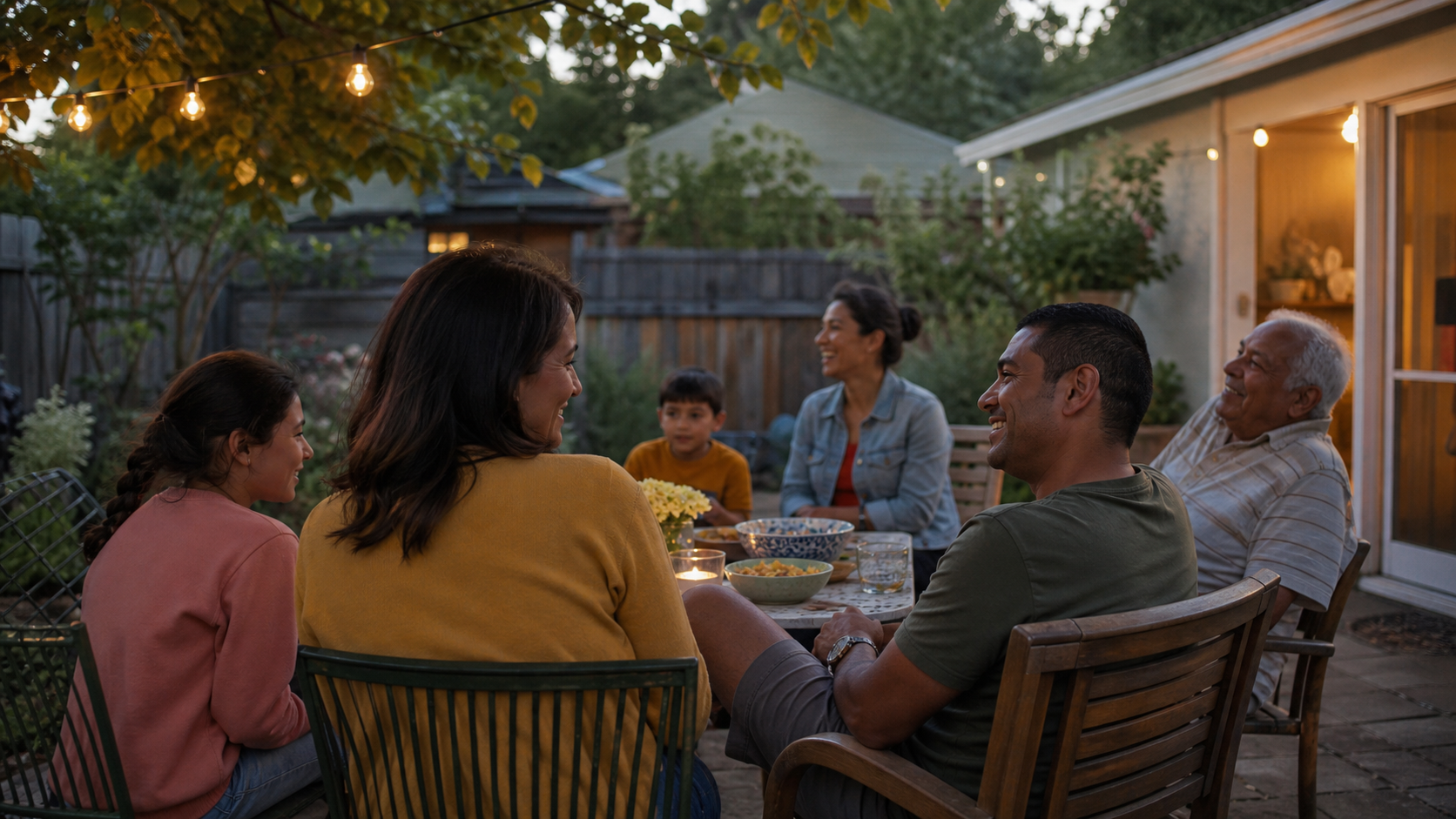 Presence
 Connection
This does not have to be so hard.
Finish the workday with the work finished. Be present for whatever you choose next.
Get the work done. Get your time back.
If this is how you believe work should feel, Cards may be the system your team has been missing.